Lincolnshire Sausage Fry-Up
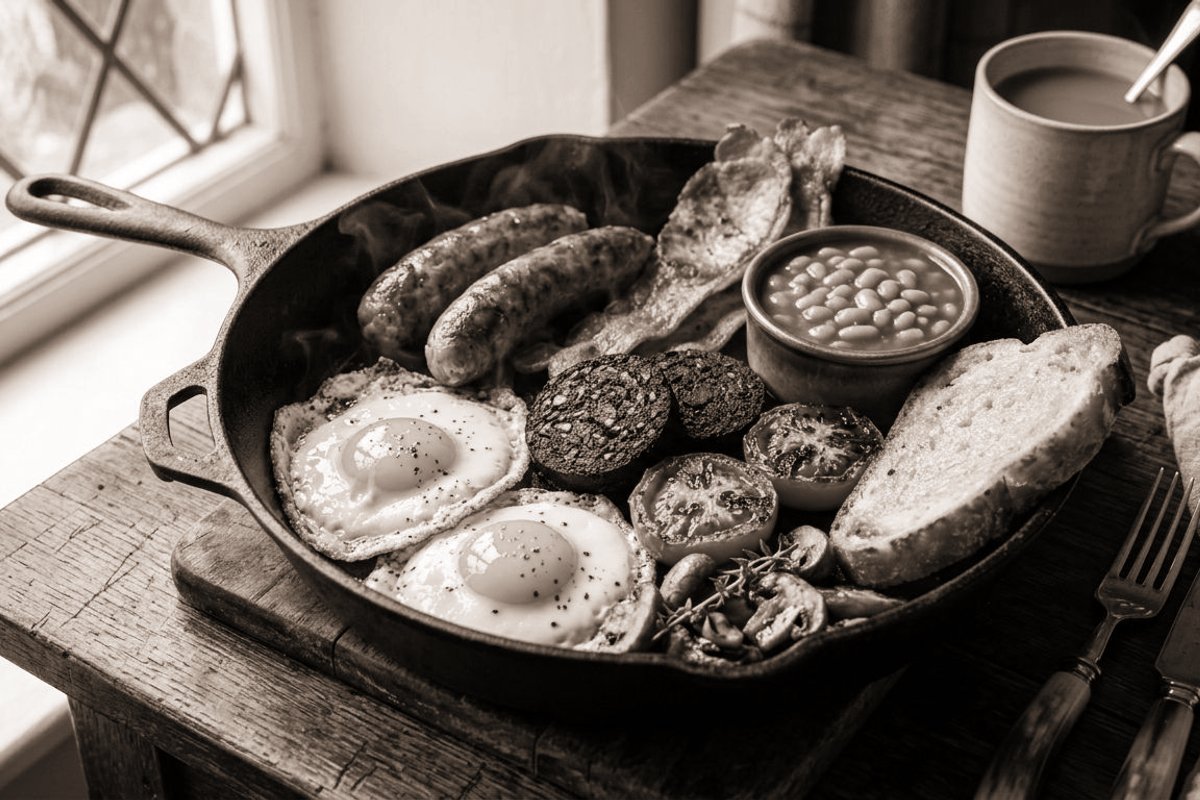
Lincolnshire Sausage Fry-Up
Prep: 10 minutes · Cook: 25 minutes · Total: 35 minutes · Serves 2
Ingredients
The plate
- 4 Lincolnshire sausages (360 g), at room temperature, pricked once each
- 4 large eggs (220 g)
- 3 rashers (150 g) back bacon (optional — the full works)
- 2 thick slices (140 g) white bread, for fried bread
- 150 g chestnut mushrooms, halved
- 200 g baked beans, warmed with 5 g butter
- 1 large tomato (150 g), halved
Fat and seasoning
- 10 ml / 10 g neutral oil, to start
- 10 g butter
- 2 g fine sea salt (light — the sausage seasons)
- 1 g black pepper
Instructions
- **Sausages slow, 14–16 minutes.** Film the pan with the oil over medium-low heat and lay in the sausages. Turn every 3–4 minutes, cooking to an even deep brown on all sides. Checkpoint — deeply browned, skins taut, juices running clear at a nick — and the nick reveals the coarse, sage-flecked interior that is the sausage's whole point. The pan holds a slick of herb-scented rendered fat.
- **Fried bread, then bacon and mushrooms, 8 minutes.** Lay the bread into the sausage fat, press flat, fry 90 seconds a side, and hold warm. Add the bacon (if using) for 4 minutes, pressing flat at contact, and the mushrooms for the last 5, browning them in the accumulating sage fat. The tomato halves go cut-face down for the final 2 minutes. Checkpoint — bread golden and grease-drunk; bacon flat and amber; mushrooms browned and glossy; tomato blistered and slumping. Every component has taken on the sage's perfume — the plate is seasoned by the pan, not the salt cellar.
- **Eggs basted in the sage fat, 3 minutes.** Clear the pan's centre, add the butter, and crack in the eggs when it foams — basting the herb-scented fat over the whites until set, 2–3 minutes, yolks running. Checkpoint — lace-edged whites, liquid yolks, and the eggs tasting faintly of sage — the plate's signature bite, exactly as the Cumberland's eggs taste of pepper.
- **The plate, quiet around the sausage.** Beans contained to one side (warmed with the butter while the eggs ran), sausages centred, bacon and mushroom flanking, tomato at six, fried bread propped, eggs at the crown. Pepper over the eggs; salt held back. Checkpoint — the complete plate at arm's length — and the smell test is the real one: sage rising off the whole arrangement, the county's breakfast identified from the doorway.
Troubleshooting
| Symptom | Cause | Fix |
|---|---|---|
| Sausages split and leaked | Heat too high for the plump coarse grind | Medium-low, 14–16 minutes, patient turns |
| Grey, boiled-looking skins | Pan crowded or sausages wet | Room temperature, dry surface, space in the pan |
| Plate over-salted | Salted components over the sage fat | Salt the eggs only; taste everything else first |
| Eggs tasted of nothing | Fat poured off, fresh oil used | The sage fat is the point — leave the slick in for the eggs |
Storage, Make-Ahead & Variations
- **Leftover cooked sausages keep 3 days** and slice cold into the finest sage-and-onion sandwiches; the components reheat on a tray at 180 °C for 10 minutes. Eggs always fresh. - **Variation — the homemade version:** the homemade Lincolnshire sausages master takes this plate to its summit — the fry-up and the sausage from the same kitchen, one overnight apart. - **Variation — the sage-and-onion plate:** swap in the sage-and-onion sausages and lose the plain mushrooms' neutrality — the sweetest, softest version of the plate. - **The county note:** serve with brown sauce and a strong mug of builder's tea, and the Lincolnshire flat has been faithfully rendered from Land's End to John o' Groats.