Bubble-and-Squeak Cakes
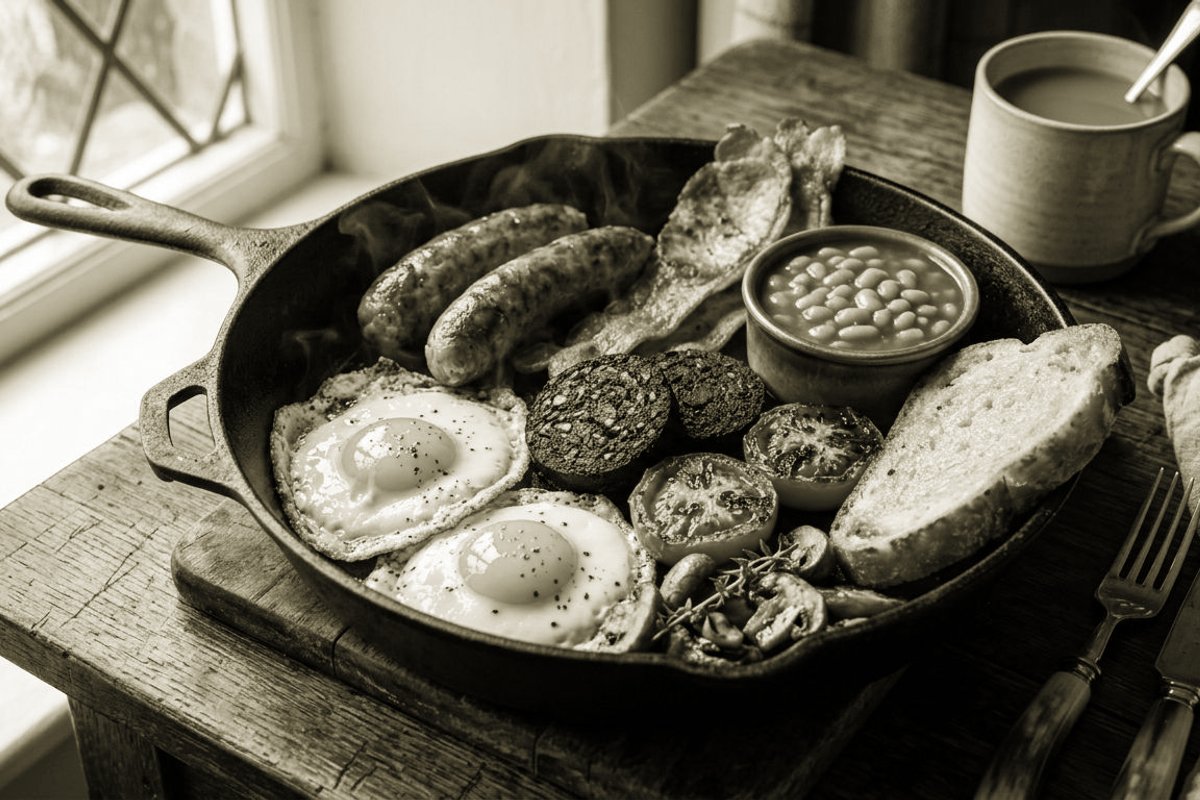
Quantities live in the recipe card.
The cakes
For frying
- small cakes fry hotter than the big disc)
To serve
- see Variations
Doneness & Quality Checkpoints
- Shaping: 2 cm thick, pressed firm, cracked rims re-pressed before the chill.
- First side: 3 undisturbed minutes at medium to a freckled deep gold.
- Second side: 2–3 minutes, cheese laced and caught at the edges, no pale bands.
- Centre: each cake steaming hot throughout, centre held at 75 °C for 30 seconds; crust audibly crackles, middle soft and Cheddar-flecked.
Bubble-and-Squeak Cakes
Prep: 15 minutes, plus 20 minutes chilling · Cook: 15 minutes · Total: 50 minutes · Makes 8 cakes (serves 4)
Ingredients
The cakes
- 500 g cold cooked floury potatoes, roughly mashed
- 200 g cold cooked cabbage or Brussels sprouts, squeezed very dry, finely chopped
- 30 g butter, softened
- 50 g mature Cheddar, grated (the small-format luxury the big cake can't carry)
- 2 spring onions, finely sliced (30 g)
- 3 g fine sea salt
- 1 g black pepper
- 0.5 g grated nutmeg
For frying
- 30 g butter plus 15 ml neutral oil (the oil buffer — small cakes fry hotter than the big disc)
To serve
- Brown breakfast sauce, poached or fried eggs, or the breakfast muffin build — see Variations
- 8 cakes serve 4 as a component, 2 as a light meal
Instructions
- **Mix and shape.** Combine everything through the nutmeg until the mix holds when squeezed. Divide into 8 (about 110 g each) and shape into rounds 7–8 cm across and 2 cm thick, pressing each firmly between cupped palms. Chill 20 minutes. Checkpoint — each cake holds a clean, crisp edge and lifts off the board intact; the surface is matte and compact. Any cake that cracks at the rim gets re-pressed — a cracked rim is a crumbled cake in the pan.
- **Fry hot-ish and short — 3 minutes a side.** Heat the butter and oil in a large pan over medium heat until foaming. Fry the cakes in one uncrowded layer (two batches if needed), 3 minutes undisturbed to a deep gold crust, then flip each with a single confident turn and give 2–3 minutes more. Hold finished cakes in a low oven (about 120 °C) while the second batch runs. Checkpoint — both faces deep golden with darker lacy edges where the cheese caught, the sides showing no raw ring, and each cake steaming hot throughout, with its centre held at 75 °C for 30 seconds on a clean food thermometer. The small format browns faster than the master's disc — medium, not medium-low, and watch the second side.
- **Serve hot, sauced, or stacked.** The cakes land beside the eggs as the potato component, or become the plate themselves: two cakes, a poached egg, sauce over — the brunch presentation. Checkpoint — the eating test: an audible crust under the fork, then the soft Cheddar-flecked middle, the cabbage sweet at the caramelised rim — the master's flavour at a higher crust pitch.
Finish & Plate
As the fry-up's potato component beside the eggs, or as the foundation plate: two cakes per person, a poached or fried egg draped across, brown sauce or the breakfast chutney at the side, and a mug of tea. However they land, eat them while the crust still talks — the small format's crust is the dish's whole voice, and it softens to a murmur within minutes.
Troubleshooting
| Symptom | Cause | Fix |
|---|---|---|
| Cakes crumbled at the flip | Under-pressed, under-chilled, or coarse cabbage | Firm press, 20-minute chill, finely chopped cabbage |
| Cheese burnt before the crust set | Heat too high for the cheese's sugars | Medium, and the second side shorter than the first |
| Pale, soft cakes | Pan crowded or fat too shallow | One layer, a proper foaming film of butter and oil |
| Raw ring at the sides | Cakes too thick | 2 cm maximum — these are crust vehicles, not blocks |
Storage, Make-Ahead & Variations
- **The make-ahead champion:** freeze the shaped uncooked cakes for up to 2 months on a tray, then bag them. Cook from frozen over medium-low until steaming hot throughout, checking the centre holds 75 °C for 30 seconds. Refrigerate the mix and use it within 2 days of originally cooking its ingredients. Reheat the cakes only once and serve straight away. - **Variation — the breakfast muffin's base:** one cake replaces the muffin in the breakfast muffin build, egg folded over the top — the handheld bubble. - **Variation — the smoked fish cake:** 100 g smoked haddock, flaked, folded through the mix — the kedgeree-adjacent deluxe, and a pub-lunch standard at heart. - **The family map:** the master (whole pan), these cakes (component), the fried-egg plate (foundation), and the benedict (brunch) — one recipe's four registers, all from the same leftovers.