Breakfast Potato Rösti
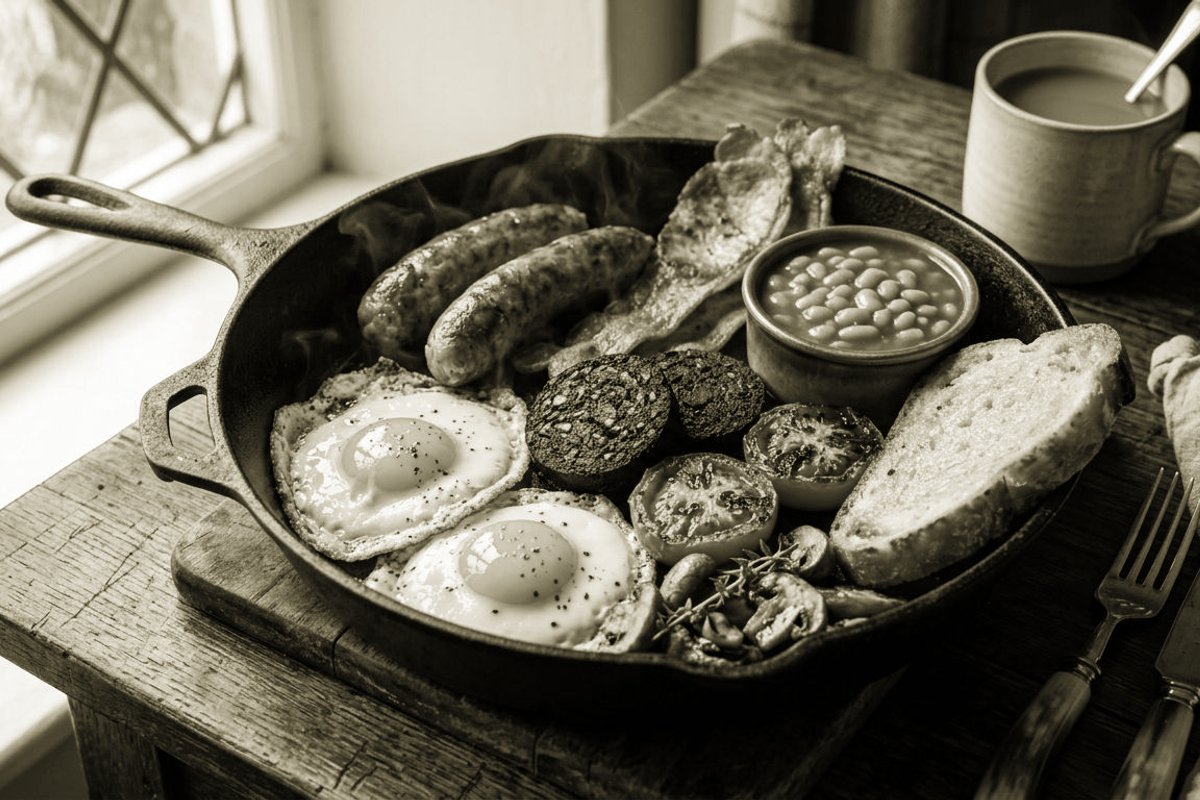
Quantities live in the recipe card.
The rösti
- the oil stops the butter burning over the long fry)
- optional; the Swiss would argue, the British breakfast wouldn't)
To serve
Doneness & Quality Checkpoints
- Potato: squeezed to a damp-towel dry; strands separate, not clumped.
- Press: 20 full seconds; cake cohesive at the edges before the timer starts.
- Crust: 8 minutes a side at medium-low; spatula slides under with crisp resistance.
- Interior: knife-tender, creamy against the crust; wedge holds its shape.
Breakfast Potato Rösti
Prep: 15 minutes · Cook: 20 minutes · Total: 35 minutes · Serves 2
Ingredients
The rösti
- 600 g floury potatoes (Maris Piper or King Edward), peeled
- 30 g clarified butter or ghee (or 20 g butter plus 15 ml neutral oil — the oil stops the butter burning over the long fry)
- 3 g fine sea salt
- 1 g freshly cracked black pepper
- 1 g onion, finely grated (about 30 g — optional; the Swiss would argue, the British breakfast wouldn't)
To serve
- 4 rashers (200 g) back bacon, crisped
- 4 large eggs (220 g), fried butter-basted in the rösti pan's fat
- 2 grilled tomato halves (150 g)
- 10 g chives, snipped
- Brown breakfast sauce
Instructions
- **Grate and squeeze — the aggressive part.** Coarsely grate the potatoes (the large holes of a box grater). Pile onto a clean tea towel, gather the corners, and twist hard over the sink, squeezing until the towel is damp and no more water will come — 30–45 seconds of genuine effort. Turn the dry potato into a bowl, separate any clumps with your fingers, season with the salt, pepper, and grated onion if using, and toss lightly. Checkpoint — the potato strands feel dry and separate rather than wet and clumped, and the towel shows dampness, not drips. Weigh it if you doubt: you should have lost 100–150 g of water from the original 600 g of potato.
- **Pan and press.** Heat the clarified butter (or butter and oil) in the pan over medium heat until foaming. Add the potato, spread it evenly, and press it down firmly with a fish slice or the back of a spoon into a compact, even cake about 2 cm thick. Press for a full 20 seconds — the cake's cohesion is built by this pressure. Then leave it entirely alone. Checkpoint — the cake's edge looks packed and the butter foams gently around it; the potato strands bind into a single mass, not a loose heap. If strands slide apart at the edge, press again and give it 1 more minute before judging.
- **The first crust — 8 minutes, untouched.** Fry 7–8 minutes over medium-low, without stirring, without peeking more than once. The underside builds the rösti's signature crust in silence; every lift resets the browning. Checkpoint — the edge of the cake is deep golden and the pan smells toasting-nutty rather than raw; a thin spatula slides fully under the cake with crisp resistance — the feeling of a crust releasing, not a mash gripping. When in doubt, 2 more minutes; a slow crust never burns at medium-low.
- **The flip — plate method, then the second crust.** Place a dinner plate face-down over the pan, invert the whole thing in one confident motion, and slide the rösti back into the pan, crust-side up. Add the last of the butter around the edge, tilting to distribute. Fry 6–8 minutes more to match the first crust. Checkpoint — the second face matches the first — even deep gold — and a knife tip slides into the centre with no resistance: the interior is soft, steamed-through, almost creamy against the crust.
- **Rest, wedge, and build the plate.** Slide the rösti onto a board, rest 2 minutes, and cut into wedges. Serve with the crisped bacon, the butter-basted eggs (fried in the rösti pan's last butter — the plate's fat economy), the grilled tomato, and brown sauce. Checkpoint — the eating test: the wedge's crust cracks audibly, the interior yields soft and buttery, and the egg yolk runs over both. This is the hash brown's elevation to a dish in its own right.
Finish & Plate
The rösti as the plate's potato centrepiece — wedges fanned, egg crowning, yolk running into the crust's cracks, bacon leaning against the cake, tomato for relief. The Swiss eat theirs plain with applesauce; the British breakfast adds the brown sauce and calls it a wash. Both are correct.
Troubleshooting
| Symptom | Cause | Fix |
|---|---|---|
| Fell apart at the flip | Wet potato, weak press, or early turn | Squeeze harder, press 20 seconds, trust the 8 minutes |
| No crust, just golden mash | Potato still wet, or heat too low to fry | The damp-not-drip towel; the butter should foam, not merely melt |
| Burnt outside, raw middle | Heat too high | Medium-low for the full 8; the crust is patience's product |
| Grey-tinged potato | Grated too early, oxidised | Harmless — but grate-to-pan in 5 minutes, or hold in cold water and re-squeeze |
| Bitter edges | Butter burned over the long fry | The clarified butter or the oil-buffered butter mix, from the start |
Storage, Make-Ahead & Variations
- **Rösti waits badly** — the crust softens in minutes — but the par-boiled variation's potatoes hold boiled-and-chilled for 3 days, making the morning a 20-minute job. Cooked rösti re-crusts surprisingly well: 5 minutes, cut-face down, in a dry pan. - **Variation — the par-boil method:** boil the whole potatoes 8 minutes, chill fully, grate on the coarse holes, squeeze lightly (they yield less water), and fry the same way — fluffier interior, gentler technique, the beginner's rösti. - **Variation — the full English rösti:** press 100 g of crisped, chopped bacon and 30 g of grated Cheddar into the potato before frying — the whole breakfast inside one cake. - **The batch note:** the recipe doubles cleanly in a 28 cm pan (1.2 kg potato) — the same 8-minute crusts, four more wedges, and the big-batch breakfast's potato question answered.